The headline number in Anna Maria city this year looks like a straightforward story: the median sale price is down roughly 7% year over year, and after the runaway years of 2021 and 2022, that reads like relief for anyone who has been priced out. But that city figure does not describe the whole island. In the third quarter of 2025, homes selling above $2 million made up 25% of all island transactions, up from 15% the quarter before. That shift points to a market that has split in two, and the line running down the middle is elevation.
Two Numbers, One Island
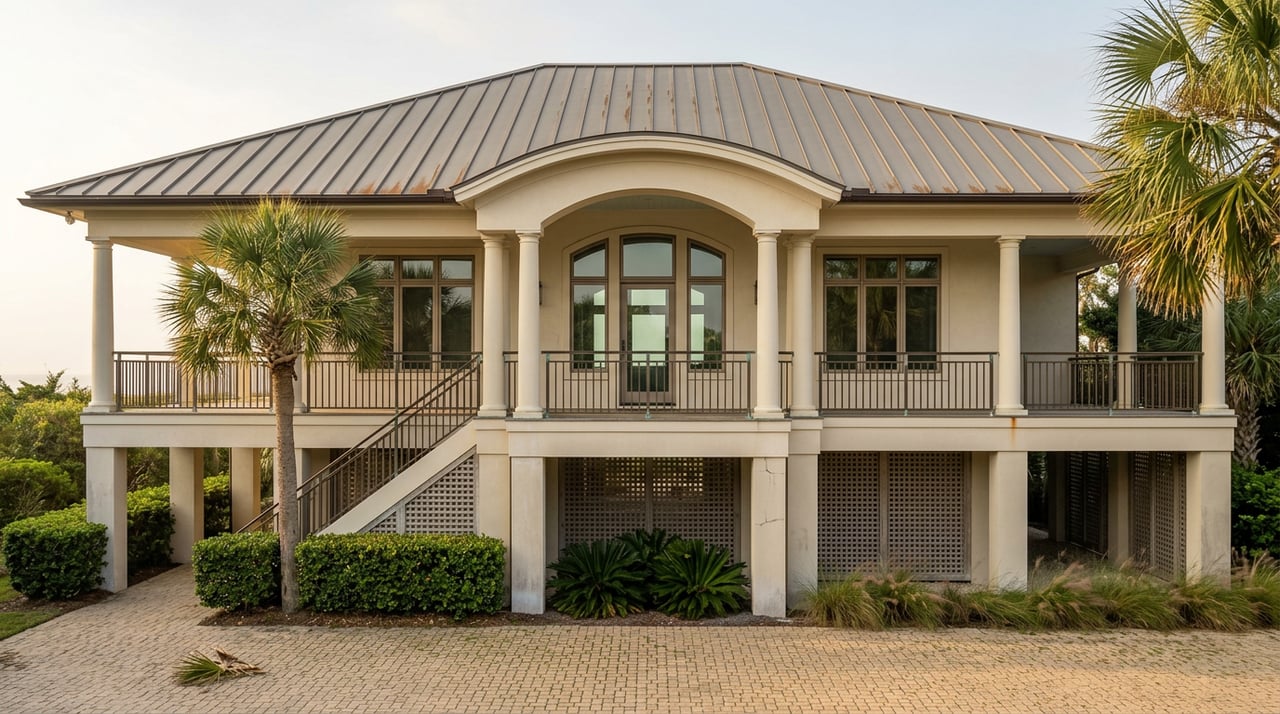
A median price is a single number pretending to summarize a market that, on Anna Maria Island right now, is really two markets moving in opposite directions at the same time. One side is older, ground-level housing stock, much of it built well before current flood construction standards, sitting on the market for months and often closing well under list. The other side is new or fully elevated, storm-hardened construction, which is holding its per-square-foot pricing and in some cases still drawing multiple offers.
Blend those two together into a single median and the number you get tells you almost nothing about what a specific property is actually worth. It tells you the mix of what sold, not the direction of value.
The Line the 2024 Storms Drew
Before Hurricanes Helene and Milton hit within two weeks of each other in the fall of 2024, elevation was one line item on a buyer's checklist, somewhere below waterfront access and lot size. Helene brought storm surge across much of Bradenton Beach that residents described as the worst since 1921, leaving a trail of condemned structures and water-damaged homes. Milton followed with Category 3 winds two weeks later, compounding the damage across the island.
What the storms did to the market was more durable than what they did to any single roof. Elevated homes with hurricane-resistant construction came through in far better shape, got repaired faster, and went back on the market sooner and at higher prices. Ground-level homes, especially older cottages built before current base flood elevation requirements, took the opposite path: longer repair timelines, harder insurance conversations, and buyers who now treat an elevation certificate as a first filter rather than a formality.
That filter is why the rebuild math changed so sharply. Post-storm labor and material demand pushed the cost of compliant elevated construction to somewhere between $350 and $500 per square foot, well above pre-2024 norms. When those new elevated homes come to market, quality construction with hurricane-resistant features is commanding $1,200 to $1,500 per square foot on the island. That gap between what it costs to build compliant and what buyers will pay for it is the real engine behind the widening spread between the two halves of the market.
What Elevation Actually Costs to Carry
The purchase price is only the entry fee. What a buyer pays every year afterward depends heavily on which flood zone the parcel sits in, and that number varies more than most buyers expect walking in.
| Flood zone | Typical annual flood insurance | What it usually means |
|---|---|---|
| Zone AE | $4,000–$8,000 | Established base flood elevation, most common zone on the island |
| Zone VE | $10,000–$12,000+ | Coastal high-hazard zone, typically Gulf-facing parcels |
Layer a separate windstorm policy and standard homeowners coverage on top of either number, and total annual insurance on a mid-range property runs somewhere between $18,000 and $28,000 a year, sometimes higher on larger waterfront homes. Since Milton, several private insurers have also tightened underwriting or pulled back from coastal Manatee County entirely, pushing more owners toward Citizens Property Insurance or a narrower private market with fewer choices.
None of this means a given property is a bad buy. It means two homes listed at the same price can carry a five-figure annual difference in true cost of ownership, and that difference almost never shows up in the list price itself. An elevation certificate and a real insurance quote, obtained before writing an offer, is how a buyer finds out which market they are actually shopping in.
Same Island, Three Different Errands
Part of why "Anna Maria Island median price" is such a blunt instrument is that the island is really three municipalities stitched together on one seven-mile strip of sand, and each one skews toward a different side of the elevation split.
- Anna Maria City, on the north end, holds most of the island's older, quieter cottage inventory. This is where the ground-level, pre-storm-standard homes are concentrated, and where the median-dragging side of the market shows up most.
- Holmes Beach, in the middle, carries most of the newer, vacation-rental-optimized construction, much of it built to current elevation standards. This is where the premium per-square-foot pricing tends to cluster.
- Bradenton Beach, on the south end near the Cortez Bridge, draws buyers who want walkable access to the Bridge Street restaurant scene, and it took some of the heaviest surge damage from Helene, which shapes what's available there today.
A buyer comparing "Anna Maria Island" to another Gulf Coast neighborhood is often really comparing an average of these three very different micro-markets against a single, more uniform market elsewhere. That's a comparison worth making carefully, not glossing over.
Why This Matters If You're Comparing Neighborhoods
Someone cross-shopping Anna Maria Island against Longboat Key or Siesta Key is usually working from portal medians, which flatten all of this into one line. But the island's supply is also swinging fast in the short term. Active listings dropped 21% in a single month this past August, from 326 properties to 256, while the pace of sales came in about 15% below the year's average, pushing months of inventory up to roughly 9.1. That's not a market moving in one clean direction. It's a market where timing and property type matter more than the topline number suggests.
The practical takeaway: a buyer should ask what elevation and construction era the properties they're comparing actually represent, not just what neighborhood or median price they carry. A seller with an older, ground-level home should expect a different buyer pool and a different negotiation than a neighbor two lots over with a fully elevated 2023 build, even if both are priced similarly on paper.
A Few Things Worth Verifying Before You Compare Prices
- Ask for the elevation certificate on any property in a flood zone before you get attached to the number on the listing.
- Get an actual insurance quote, not an estimate, since underwriting has tightened meaningfully since 2024.
- Ask whether repairs after the 2024 storms were permitted and completed to current code, especially on anything that changed hands or was renovated since October 2024.
- Confirm which of the three municipalities a listing sits in, since the character, inventory type, and price behavior differ enough to matter.
A Few Questions Worth Answering Directly
Does a falling median in Anna Maria city mean now is a cheaper time to buy on Anna Maria Island? It depends heavily on which half of the market a specific property sits in. Ground-level, older homes are seeing real price softening and longer time on market. Elevated, newer construction is holding value and, in some price tiers, still selling at a premium.
Is new construction always the safer financial choice? Not automatically, but it does tend to carry more predictable insurance costs and faster resale. The tradeoff is the higher per-square-foot purchase price. Whether that math works depends on how long you plan to hold the property and how you weigh upfront cost against annual carrying cost.
How do I find out which flood zone a specific property is in? An elevation certificate, paired with a flood zone lookup and an actual insurance quote, is the combination that answers the question with real numbers rather than a general sense of the neighborhood. FEMA's flood insurance program is a starting point for understanding what the zone designations mean before you get quotes from carriers.
If you're weighing a purchase on Anna Maria Island, or trying to figure out what a home you already own there is actually worth in today's split market, that's exactly the kind of conversation Ronnie DeWitt & Associates has every week. You can also browse the Anna Maria Island neighborhood guide for a closer look at what living across the island's three towns is actually like. Start with a free market valuation. Talk with Ronnie today.
This article is general information, not legal, tax or financial advice. Consult a qualified professional about your situation.