Wondering whether a Bradenton waterfront condo or a single-family home is the better fit for your lifestyle? It is a smart question, because these two options can look similar on a listing search but feel very different once you own them. If you want the right mix of boating access, maintenance responsibility, insurance clarity, and day-to-day control, this guide will help you compare the tradeoffs with more confidence. Let’s dive in.
Two Waterfront Lifestyles
In Bradenton, waterfront buyers are often choosing between two very different ownership models. A condo usually comes with association-managed common areas and shared rules, while a single-family home usually gives you more direct control over the house and lot.
That difference affects almost everything that follows, including maintenance, insurance, dock use, privacy, and rental flexibility. If you are deciding between the two, the right answer often comes down to how hands-on you want to be.
Condo Ownership in Bradenton
With a waterfront condo, the association is generally responsible for maintaining common elements. In Florida, that responsibility can shift in certain cases if the condo declaration assigns limited common element duties to the unit owner.
That means you need to look beyond the view and square footage. You also need to understand what the association maintains, what you maintain, and how decisions are handled.
What a Condo Usually Offers
A condo can feel more predictable when you want less owner-managed upkeep. Exterior maintenance, many shared areas, and some building systems may be handled through the association structure rather than by you directly.
That convenience can appeal to buyers who want waterfront living without managing every detail of the property. It can also mean more oversight, more rules, and less freedom to make independent changes.
What a Condo Owner Still Handles
Florida guidance makes an important distinction between the association’s master policy and your unit-level coverage. An HO-6 policy typically covers your personal property and certain building items not insured by the association.
Florida law also prevents the association’s master policy from covering specific interior items such as personal property, floor, wall, and ceiling coverings, electrical fixtures, appliances, cabinets, countertops, and window treatments inside the unit. So even if the building is insured, your interior risk is still very real.
Condo Assessments Matter
Another key point is loss assessment exposure. Florida guidance notes that owners may be assessed for damage to common areas that is not covered or when the association lacks reserves, and HO-6 policies must include at least $2,000 in loss-assessment coverage.
For buyers, that means monthly dues are only part of the picture. You should also ask about reserves, deductibles, and how the association handles major repairs.
Single-Family Waterfront Ownership
A single-family waterfront home usually gives you more autonomy. You generally control the dwelling, the lot, and more of the decisions about upkeep, use, and improvements.
That extra control also comes with more responsibility. Instead of relying on a condo association for core property management, you are usually carrying more of the maintenance and insurance burden yourself.
What More Control Really Means
For many buyers, the biggest appeal of a detached waterfront home is the ability to make decisions more directly. You may have more separation from neighbors, more practical privacy, and a more personal connection to the land and water access.
That said, more freedom does not mean no restrictions. If the home is in an HOA, governing documents may still affect use and appearance.
Insurance for a Waterfront House
Florida homeowners policies normally cover the dwelling, other structures, personal property, loss of use, personal liability, and medical payments. In practical terms, that means you are usually carrying the core property risk yourself rather than sharing it through a condo ownership structure.
For waterfront buyers, this is a major budgeting issue. A single-family home may offer more independence, but it can also mean a larger direct insurance responsibility.
Dock Access Is a Big Divider
If boating is part of your lifestyle, dock access may be the most important difference between a condo and a house. A property can be waterfront on paper and still offer very different real-world access to the water.
That is why you should not stop at the words “waterfront” or “boatable.” You need to know whether the property has actual usable dock rights, a permitted dock, a shared slip arrangement, or no dock potential at all.
Condo Dock Access
With a condo, dock access is usually document-driven. If docks or slips exist, they are often controlled as common elements or limited common elements, which means your use depends on the declaration, association rules, and governance structure.
In plain English, that can mean the dock is available, assigned, shared, waitlisted, or limited by association rules. A beautiful waterfront condo does not automatically mean you have private boating convenience.
Single-Family Dock Potential
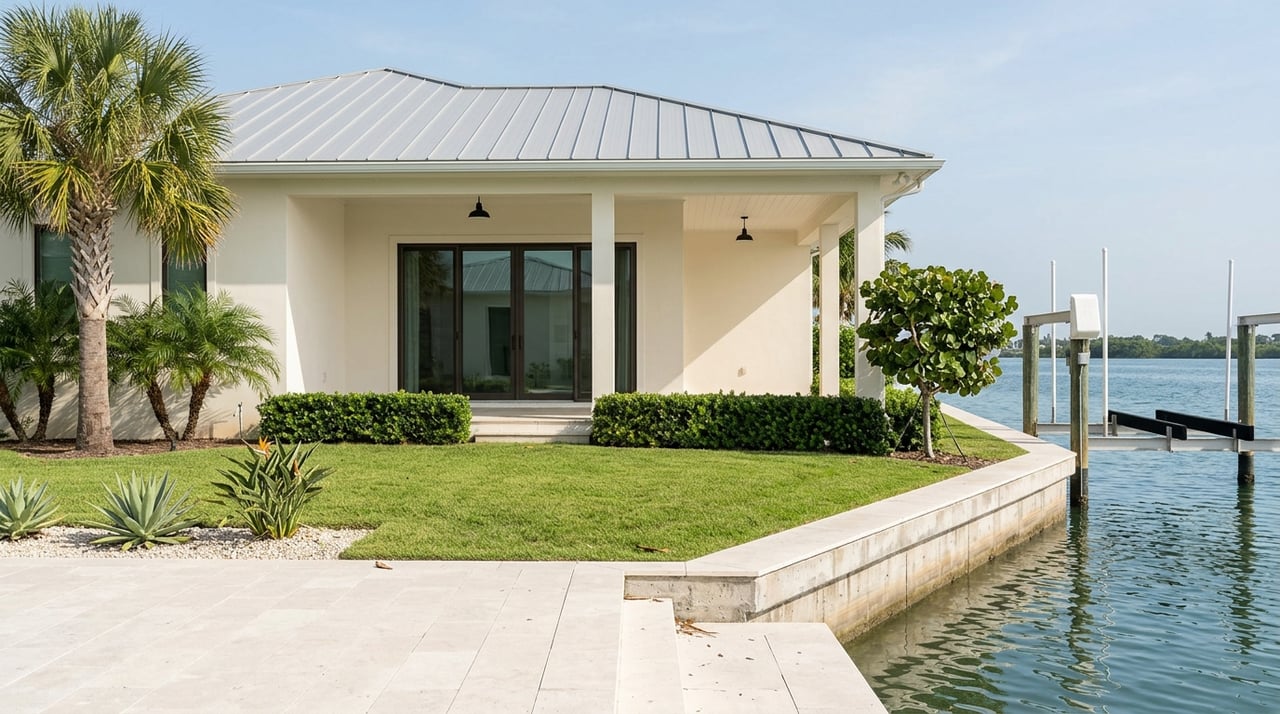
A detached waterfront home may give you a more direct path to private dock use, but that still depends on the lot, waterfront rights, setbacks, and local permitting. In the City of Bradenton, certain docks and piers require special-use approval, an easement, and DEP approval before a building permit is issued.
In unincorporated Manatee County, docks, seawalls, and similar waterfront structures are regulated under local code and may require an administrative permit along with approvals from other agencies. So even with a private lot, the answer is never just “yes, you can build a dock.”
Maintenance and Repair Tradeoffs
One of the clearest differences between these property types is who handles the problem when something needs attention. In a condo, the association generally maintains common elements, and it may also have the right to enter your unit when needed for maintenance or to prevent damage.
In a single-family home, you are usually the one coordinating repairs, upkeep, and exterior issues. That can include everything from the roof and exterior to seawall questions and waterfront improvements, depending on the property.
Questions Worth Asking
Before you buy either property type, ask exactly who maintains:
- The roof
- Windows and exterior doors
- The seawall
- The dock or slip
- Building exterior surfaces
- Shared amenities or access points
These answers can shape your long-term costs as much as the purchase price does.
Flood Insurance and Waterfront Risk
Flood exposure is central to any Bradenton waterfront purchase. Florida officials state that flood insurance is typically separate from a standard homeowners policy, and lenders may require flood insurance even though Florida law does not require every homeowner to carry it.
If the property is in a Special Flood Hazard Area and you are using a government-backed mortgage, flood insurance is required. That makes flood-zone review a must-do step, not a minor detail.
Why This Matters for Both Options
For condo buyers, you need to understand both the association’s insurance structure and your own HO-6 needs. For single-family home buyers, you need to understand your direct exposure and likely coverage costs.
In either case, verify the flood zone and ask whether an elevation certificate is available. That information can affect both insurability and monthly ownership costs.
Older Waterfront Condos Need Extra Review
For many Bradenton condo buyers, building condition due diligence now deserves extra attention. Under current Florida law, condo and cooperative buildings that are three stories or more must have milestone inspections by the year they reach 30 years of age, and local enforcement can require the first inspection at 25 years in areas close to salt water.
Buyers may also receive a current milestone-inspection summary and the association’s most recent structural integrity reserve study. If those materials are delivered late, buyers may have closing-extension or cancellation rights.
What to Review Before Closing
If you are considering an older waterfront condo, ask for:
- The milestone-inspection summary
- The most recent structural integrity reserve study
- The master insurance policy information
- Deductible details
- Reserve information
- Any known upcoming repair projects
These documents can tell you much more than photos or amenities ever will.
Rental Rules Can Vary Widely
Many buyers assume condos are stricter and houses are looser when it comes to rentals. In reality, rental flexibility often depends more on the governing documents than on the property type itself.
Florida law gives associations powers set out in their documents, and condo owners are subject to the declaration, bylaws, and rules. That means two similar waterfront properties can have very different lease terms, approval requirements, guest policies, or waiting periods.
Boat and Storage Rules
For homes in an HOA, Florida law limits certain restrictions on items not visible from parcel frontage or adjacent areas, including boats, unless another law or local ordinance says otherwise. Even so, local code and association rules still matter.
If boat storage is important to you, ask specific questions before you fall in love with the property. The answer may be more nuanced than the listing suggests.
Which Option Fits You Best?
A waterfront condo in Bradenton may be the better fit if you want more predictable shared maintenance, a simpler exterior ownership model, and a lifestyle centered on convenience. The tradeoff is that you will likely have more rules, more shared control, and a closer look at association finances and building condition.
A single-family waterfront home may be the better fit if you want more autonomy, more separation, and a more direct connection to your dock or lot decisions. The tradeoff is that you will usually take on more maintenance, insurance, and permitting responsibility yourself.
The best choice is the one that fits how you want to live, not just what looks best online. If you want help comparing waterfront condos and homes in Bradenton with a clear eye on boating access, rules, and long-term ownership costs, Ronnie DeWitt can help you narrow the options and move forward with confidence.
FAQs
Is a Bradenton waterfront condo easier to maintain than a single-family home?
- Usually yes, because condo associations generally maintain common elements, while single-family homeowners usually handle more property maintenance directly.
Does a Bradenton waterfront condo include dock rights?
- Not always. Condo dock access is usually controlled by the condo documents and association rules, so you need to confirm whether the dock is shared, assigned, deeded, or unavailable.
Can you build a dock at a Bradenton waterfront home?
- Possibly, but it depends on the property, waterfront rights, setbacks, and local permitting rules in the City of Bradenton or unincorporated Manatee County.
Do Bradenton waterfront homes need flood insurance?
- Flood insurance is generally separate from standard homeowners insurance, and lenders may require it, especially if the property is in a Special Flood Hazard Area.
What insurance does a Bradenton condo owner need?
- A condo owner typically needs an HO-6 policy for personal property, certain interior building items, personal liability, and required loss-assessment coverage.
Should you review milestone inspection documents for a Bradenton condo?
- Yes, especially for older waterfront condo buildings that are three stories or more, because milestone inspections and reserve studies can affect future costs and building condition review.