Dreaming of Siesta Key but torn between toes-in-the-sand beach living and a home on the water with your own dock? You are not alone. Both options offer an incredible lifestyle, yet they feel very different day to day and come with unique costs, rules, and risks. In this guide, you will learn how beachside and bay or canal-front living compare on Siesta Key, what to budget for, and the key steps to take before you buy or sell. Let’s dive in.
What “beachside” and “waterfront” mean on Siesta Key
Siesta Key is a barrier island off Sarasota with two distinct shorelines that create two very different property types.
- Beachside or Gulf-front means your property faces the Gulf of Mexico and has direct sand and beach access. You enjoy Gulf views and easy access to Siesta Beach or Crescent Beach.
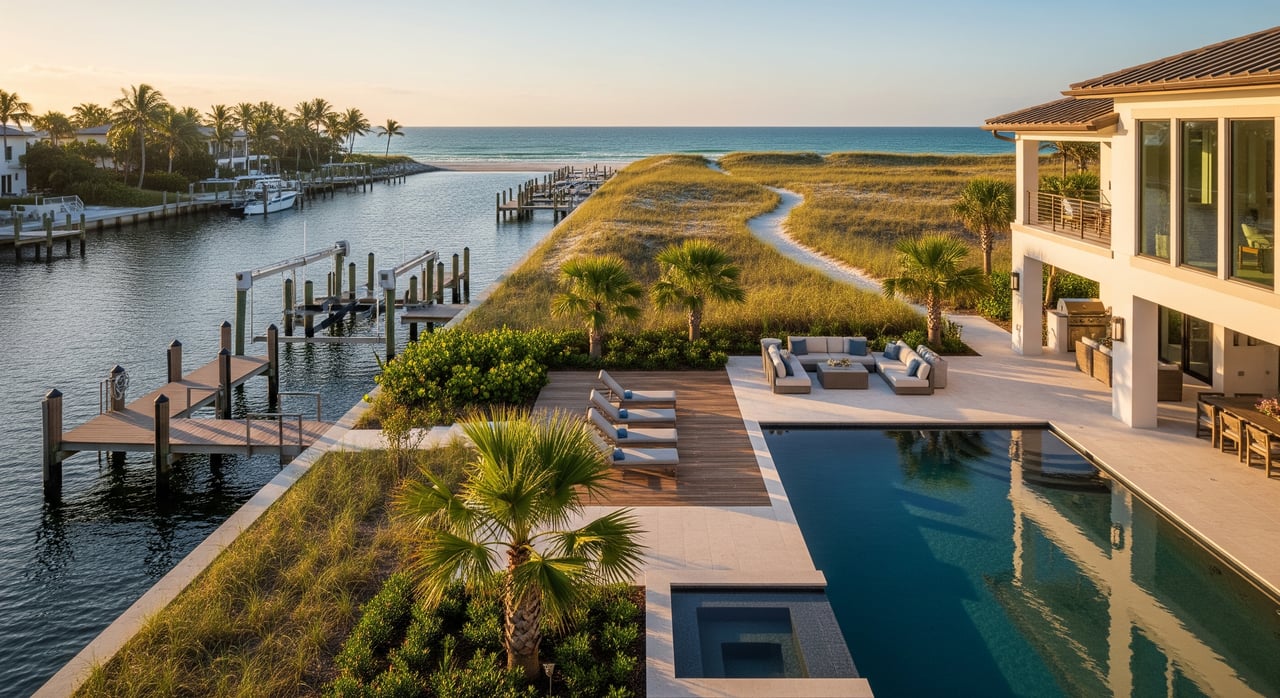
- Waterfront on the bay or canals means your property sits on Little Sarasota Bay, a canal, lagoon, or similar protected waterway. These homes often have docks or boat slips and access to the Gulf through Sarasota Bay and nearby passes.
On the Gulf side you will see condos, single-family homes, and luxury estates right on the sand. On the bay and canals you will find single-family homes with private docks, duplexes, and small condo communities with boat facilities. Many spots on the island put you just minutes from both.
Lifestyle: how living feels day to day
Beachside: sand, sunsets, and walkability
If you want to step from your door to powder-soft quartz sand, beachside delivers. You will enjoy daily sunsets, quick beach swims, and the easy option to walk to beach access points. In peak season, expect more public activity near popular stretches like Siesta Beach and spots close to the Village. Parking can be tight, and you will notice salt spray and wind more on exterior finishes.
Waterfront: boating and calmer water
If boating, fishing, and paddle sports are your priority, a bay or canal home is hard to beat. Protected waters make daily outings easier, and many homes have private docks or lifts. Canal and bay-front areas can feel quieter along the shoreline, though you may hear boat traffic and neighbors at nearby docks. Depending on the address, the Village and public beach may be a short drive or bike ride rather than a quick walk.
At-a-glance comparison
| Factor | Beachside/Gulf-front | Bay/Canal Waterfront |
|---|---|---|
| Primary lifestyle | Beach access, sunsets, views | Boating, docks, protected water |
| Typical property | Beachfront condos, single-family, estates | Single-family with docks, duplexes, small condos |
| Pricing tendency | Highest per-square-foot premium | Premium varies by dock size, access, seawall condition |
| Noise/activity | Busier near public beach and Village | Often more private along canals and bay |
| Maintenance focus | Exterior wear from salt and wind; dune/beach management | Seawalls, docks, lifts; shoreline permits |
| Key regulations | Coastal Construction Control Line and beachfront rules | Mangrove protection, dock/seawall permitting |
Cost, value, and resale potential
Gulf-front properties typically command the highest per-square-foot prices thanks to direct sand access, unobstructed Gulf views, and strong vacation demand. By contrast, bay and canal homes can also be premium, but values depend on the dock and boating setup, depth and ease of navigation to open water, seawall condition, lot size, and the home’s elevation and view corridor.
Well-located Gulf-front condos and single-family homes near Siesta Beach often see strong resale demand, though inventory is limited. Waterfront canal and bay homes appeal to boaters and full-time residents and can have excellent long-term value if docks, seawalls, and access are favorable.
Financing and appraisals can be nuanced. Lenders will evaluate flood zones, elevation, and insurance needs. Appraisals for unique waterfronts may involve few direct comps, so your agent will look closely at recent sales and property specifics.
Rentals and income potential
Gulf-front properties usually earn higher nightly short-term rental rates due to direct beach access and views. Bay and canal homes can also perform well, especially among boating vacationers who value docks and lifts. Always confirm short-term rental rules and HOA policies before underwriting any income. Rules vary by community and county, and HOA restrictions can limit minimum stays or prohibit rentals entirely.
Risk, insurance, and regulations to know
- Flood zones and surge exposure. Many Gulf-facing properties lie in high-velocity V or VE zones with higher storm surge exposure. Canal and bay properties may be in V zones near passes or AE-type zones depending on elevation. Check exact parcels on the FEMA Flood Map Service Center and request an Elevation Certificate if available.
- Windstorm and hurricane risk. Both sides of the island face tropical storms and hurricanes. Wind mitigation features like shutters and roof tie-downs can impact premiums.
- Coastal Construction Control Line. Beachfront work is closely regulated. The Florida Coastal Construction Control Line program governs construction and rebuilding near the Gulf, which can limit additions or require specific permits and elevations.
- Seawalls and shoreline structures. Bay and canal properties commonly have seawalls. Verify condition, ownership, and permit history. Seawall or dock replacement can be a significant expense and may require engineering and permits.
- Environmental protections. Gulf-facing properties must follow sea turtle lighting rules. Bay and canal lots may involve mangrove protections, riparian setbacks, and permits for vegetation removal, dock work, or seawall projects.
- Insurance market realities. Florida coastal premiums can be high. Review the Florida Office of Insurance Regulation for consumer guidance and learn about options such as Citizens Property Insurance. Obtain flood and wind quotes early. Some buyers find private flood policies that better fit their needs, but always compare coverage and lender requirements.
- Long-term resilience. Barrier islands face sea-level rise and storm surge risk over time. Explore scenarios using the NOAA Sea Level Rise Viewer as part of your long-term planning.
Maintenance and ownership costs
Beachside owners should plan for more exterior wear from salt spray and wind. Paint, metal fixtures, railings, and exposed wood can require more frequent attention. HVAC systems and exterior surfaces may have shorter effective lifespans in this environment. Dune areas and beach access points may involve specific rules and seasonal considerations.
Bay and canal owners should budget for seawall upkeep, dock and piling repairs, and lift maintenance. Shoreline projects often require permits and sometimes engineered designs. Mosquito activity can be higher near standing water depending on drainage. Both sides of the island share coastal realities like faster wear on roofs and mechanical systems, so it pays to review maintenance records and reserve for replacements.
Also confirm utilities. Some older barrier-island properties may have septic rather than sewer; understand maintenance needs and any upgrade plans. Condos and HOAs vary in how they fund reserves and insurance, and special assessments can impact carrying costs.
Buyer and seller checklist
Use this quick checklist to focus your due diligence:
- Flood and elevation
- Confirm the current FEMA flood zone and request an Elevation Certificate.
- Ask about prior flood claims and stormwater history.
- Insurance
- Obtain quotes for windstorm and flood early. Confirm any special conditions.
- Ask about recent non-renewals or policy changes that could affect closing.
- Shoreline and structures
- Verify age and condition of seawalls, docks, pilings, and lifts.
- Collect permit records for past shoreline work and any pending applications.
- Coastal and environmental rules
- Determine if the property is landward or seaward of the CCCL.
- Ask about dune, mangrove, or wildlife lighting requirements and any beach access easements.
- Utilities and infrastructure
- Confirm sewer versus septic and review drainage and stormwater setup.
- HOA and community rules
- Review covenants, rental policies, assessments, reserves, and any recent special assessments.
- Title and access
- Verify beach access easements, public rights-of-way, and any utility easements.
- Inspections
- Order general, wind mitigation, termite, moisture, and corrosion inspections.
- For waterfront, add seawall and dock evaluations by qualified professionals.
- Financing
- Discuss lender requirements for flood insurance and coastal properties.
- Prepare for appraisal challenges with unique Gulf-front or premium dock features.
- Rentals and revenue
- If applicable, review historical occupancy and revenue, and confirm STR compliance.
Which option fits you best?
Choose beachside if you want direct sand access, sunset views, and walk-to-beach convenience, and you are comfortable with higher per-square-foot pricing and stricter coastal rules. Choose bay or canal-front if you prioritize boating and protected water access, value a dock and lift, and prefer a quieter shoreline with different maintenance priorities. Many buyers define their must-haves first, then compare specific addresses for flood zone, insurance, walkability, and boating access.
How a trusted local advisor helps
Selecting the right Siesta Key property is about matching lifestyle with smart risk and cost planning. A seasoned, boutique team will help you evaluate flood zones and elevation, line up insurance quotes early, review seawall and dock records, confirm rental and HOA rules, and position your purchase or sale for the best outcome.
If you are considering a move on Siesta Key, connect with a team that combines nearly three decades of local expertise with concierge-level service and premium marketing. Start with a free market valuation and a practical plan tailored to your goals. Talk with Ronnie DeWitt today.
FAQs
What is the main lifestyle difference between beachside and canal homes on Siesta Key?
- Beachside offers direct sand access and sunset views, while canal and bay homes focus on boating, docks, and calmer protected waters.
Are Gulf-front homes usually more expensive than canal or bay homes?
- Yes, Gulf-front typically carries the highest per-square-foot premium due to direct beach access, views, and strong vacation demand.
Will I need flood insurance for a Siesta Key property?
- If your loan is federally backed and the property is in a FEMA flood zone, flood insurance is usually required; many coastal lenders require it regardless.
Can I rebuild or expand a beachfront home on Siesta Key?
- Beachfront construction is tightly regulated near the CCCL, often requiring permits and specific elevation or design measures before work proceeds.
What should I check first on a canal or bay-front home?
- Start with the seawall and dock: age, condition, permits, and ease of navigation to open water, then review flood zone, elevation, and insurance quotes.
Which type is better for short-term rentals on Siesta Key?
- Gulf-front usually earns higher nightly rates, while canal and bay homes attract boaters; always confirm local and HOA rules before planning STR income.